If you've been thinking about selling a home in Tampa Bay, 2026 probably felt different from the frenzy years. Buyers took longer to decide. Listings had more company. And pricing that would have started a bidding war a few years ago sometimes just sat.
That's not a crash. It's a market settling into something more normal, and that shift is the story of the year.
Here's what the data shows, and what it means if you're planning to list.
Prices Held. The Pace Did Not.
The most important headline for sellers is also the most reassuring one: home prices in the Tampa Bay metro did not fall apart this year. They held, and in some measures they even ticked up.
According to Florida Realtors' September 2026 market report for the Tampa–St. Petersburg–Clearwater metro (Hillsborough, Pinellas, Pasco, and Hernando counties), the median single-family sale price was $400,000, up 0.5% from a year earlier. The year-to-date median through September was $409,000, up 2.3%, and the third-quarter median was $409,990, up 2.5%, on 9,533 closed sales.
Those are metro-wide figures, so they won't match what you see on any one street. In the city of Tampa, Redfin's data for the three months ending in October put the median sale price at $448,188, up 6.7% year over year. Neighborhood, property type, and condition still matter more than any single headline number.
The other half of the story is volume. September single-family closed sales in the metro fell 7.7% from a year earlier, to 2,938 homes, and third-quarter single-family closings were down 5.1%. Statewide, Florida Realtors reported in mid-November that October single-family sales dropped 10.1%, the third straight month of year-over-year declines. Official October statistics for the Tampa Bay metro had not been published in that same release at the time of writing, but the pattern is clear: fewer closings, not a broad retreat in single-family prices.
Townhomes and condos had a softer year. In the third quarter, the metro's condo and townhouse median was $265,000, unchanged from a year earlier. Statewide in October, those prices were down 3.3%, with about eight months of supply — enough to give buyers more negotiating room in that segment.
Buyers Have More to Compare, and They're Taking Their Time
This is not 2022, when homes in some Tampa Bay neighborhoods went under contract in days and buyers waived nearly everything. Time on market has stretched, and presentation has more work to do.
In September, the metro had 12,522 active single-family listings and a four-month supply of inventory, per the Florida Realtors report. Median time to contract was 41 days, and median time to sale was 80 days. In the city of Tampa, Redfin put median days on market at 73 over the three months ending in October, up from 50 a year earlier. About 40.6% of Tampa listings in that window had a price reduction, and the typical home sold for about 96.6% of list price.
A four-month supply is still tighter than the roughly 5.5 months often treated as a fully balanced market, so this is not a deep buyer's market. It is a more even one. Buyers can tour several homes, hesitate, and ask for a credit — a different showing experience than the one sellers remember from a few years ago.
Mortgage Rates Set the Tempo
Rates did a lot of the slowing. The average 30-year fixed mortgage stood at 7.11% as of November 12, 2026, according to Freddie Mac's Primary Mortgage Market Survey, the fourth consecutive weekly decline after a stretch of higher borrowing costs. Florida Realtors' chief economist has noted that if rates remain above 7%, sales are likely to stay subdued and inventory could gradually increase. If they ease further, some sidelined buyers may come back.
Statewide, new pending single-family sales were down 15.7% in October, a signal that closings may stay softer for another month or two. For sellers, that does not mean "don't list." It means the first two weeks on the market matter more, because the buyer pool is choosier and less rushed.
What This Means If You Plan to List
A slower, more balanced market is not a reason to skip preparation. It is the reason to take it seriously.
Homes that were priced to recent comparable sales, and that showed well in photos and in person, still moved. In September, sellers in the metro received a median 96% of the original list price. The listings that linger tend to have one of two problems: the price is ahead of the neighborhood, or the home asks buyers to use their imagination.
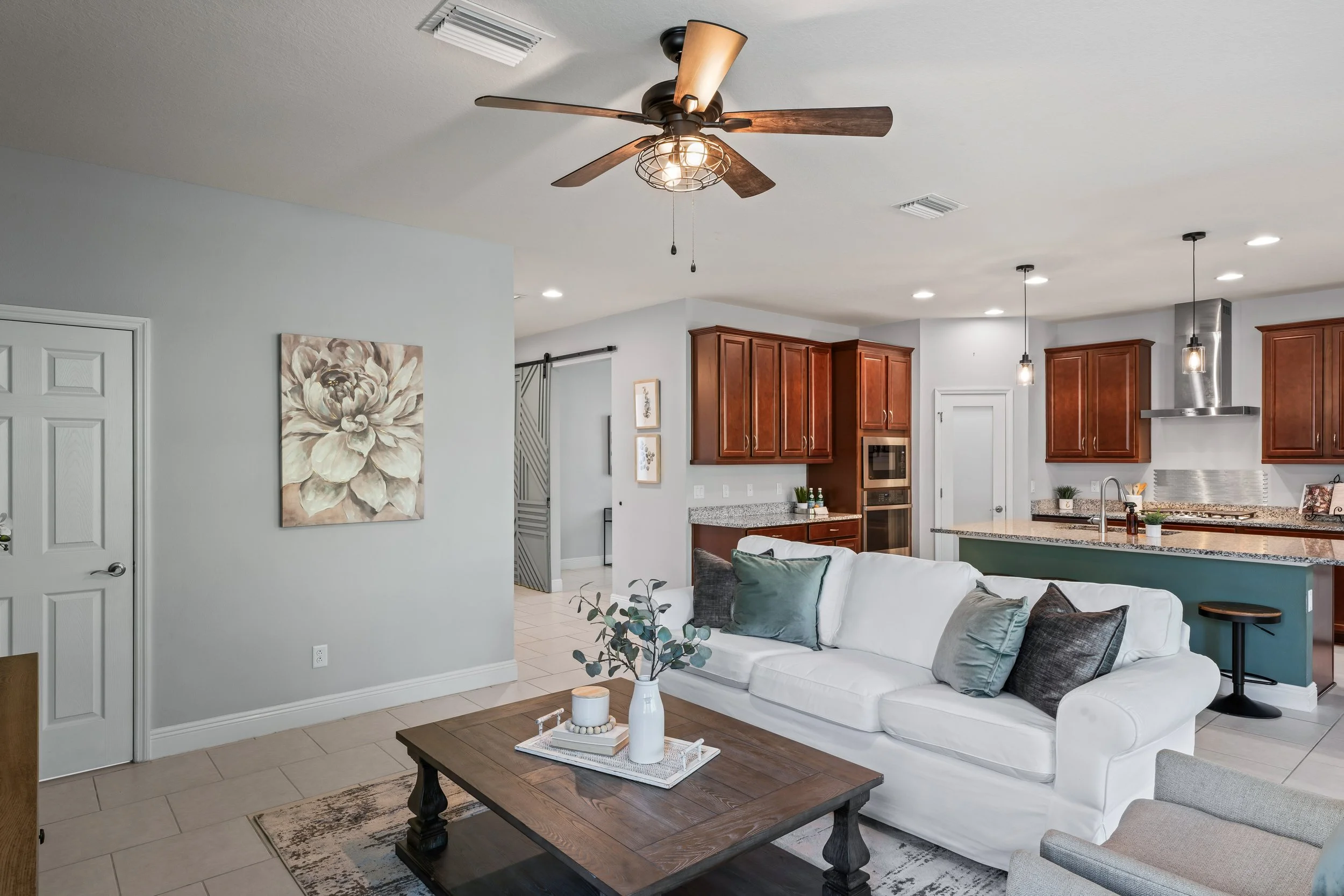
That second problem is where staging earns its keep. When buyers have more homes to choose from, they spend less time trying to picture a sofa in an empty living room or a family dinner in a cluttered kitchen. They remember the house that already felt finished. In a market where days on market have stretched and price cuts are more common, a home that photographs cleanly and shows as move-in ready gives buyers fewer reasons to keep looking.
If you're aiming for a late-year or early-2027 listing, walk the house the way a buyer will — through the listing photos first, then through the front door. Fix the small stuff. Clear the visual noise. Make the purpose of each room obvious. And if you want a second set of eyes on what will actually help in this market, that's the conversation we have with sellers and agents every week.
FAQ: What Are the Current Real Estate Trends in Tampa Bay?
What are the current real estate trends in Tampa Bay? The market is more balanced than it was during the boom years. Official data through September shows single-family prices roughly steady to slightly higher, while sales are down and homes are taking longer to go under contract. Buyers have more listings to compare, rates near 7% still shape who can comfortably purchase, and well-priced, well-presented homes are the ones still getting close to asking.
Are Tampa Bay home prices dropping? Not in a broad, metro-wide way. Single-family median prices were flat to modestly up through September. Condo and townhouse prices have been softer, and some neighborhoods are negotiating more than they did at the peak. Recent comparable sales on your street matter more than the metro median.
Is this a good time to sell a home in Tampa Bay? It can be, if the home is priced to the current market and ready to show. Buyers are more deliberate and have more options, so a listing has to earn the second visit. Pricing accurately, completing visible repairs, and staging so buyers can see the lifestyle on day one still put sellers in a strong position.
The Bottom Line
Tampa Bay's 2026 housing market rewarded patience and preparation more than it rewarded wishful pricing. Prices held. Sales slowed. Inventory gave buyers room to compare, and that is likely to carry into early 2027, especially if mortgage rates stay elevated.
If you're planning to list, the trend to watch isn't just the median price. It's how quickly a well-presented home can still stand out when buyers have choices. That's the part staging is built for.
Thinking about selling in the new year? Upstaged to Sell would be glad to walk through your home and talk about what would help it show its best. Call (727) 371-5696, or visit upstagedtosell.com/services to get started.